Rafael Caro Repetto: Learning about China through Peking Opera
2025-09-25 14:46:03 來源:人民網 
2025-09-25 14:46:03 來源:人民網
Amid cheerful crowds and the fresh morning breeze off the Atlantic, "Our China Stories" sat down with Dr. Rafael Caro Repetto in the coastal town of Chipiona in Spain's Cadiz Province.
This ancient town, dating to 140 B.C., is the hometown of Caro, who now serves as a lecturer and researcher in ethnomusicology at Interdisciplinary Transformation University in Austria. Ethnomusicology is the study of music in its social and cultural context and Caro's work focuses on traditional Chinese theatre, particularly Peking Opera (Jingju).
In 2000, Caro first encountered traditional Chinese music through internationally renowned Chinese composer Tan Dun. It was the 250th anniversary of Johann Sebastian Bach's death, and Tan Dun was commissioned to write music for the occasion. His work "Water Passion After St. Matthew," which blends Mongolian singing, Tibetan percussion and Bach's classical legacy, captivated Caro and planted the seeds of his deeper exploration into traditional Chinese music.
After completing his studies in musicology, Caro travelled to Peking University to learn Chinese. There, he experienced Peking Opera for the first time. "I didn't know anything about it," he said. "I thought it was opera, like Verdi or Puccini, but with Chinese themes. When I was confronted with a real performance of Jingju, I was totally lost."
He recalled how other audience members reacted to the same performance. A few seats away, an older woman was crying with emotion. That stark contrast between his confusion and the woman's deep emotional connection with the art form sparked his determination to understand Peking Opera.
Caro later conducted fieldwork at the National Academy of Chinese Theatre Arts in Beijing. Besides attending student rehearsals of Chinese opera, he took classes in laosheng, or elderly male roles. He said it was incredibly valuable to experience the music not only from a listener's perspective, but also from that of a performer.
Caro pointed out that the name "Chinese opera" can be misleading in understanding the mechanism of traditional Chinese theatre. While it carries cultural significance equivalent to opera in the West, its origins and mechanics are profoundly different. Western opera began as an intellectual project among elite artists in Italy, he explained, while Chinese theatre evolved from common people collecting and combining various folk arts into one complex genre. Every movement, song and instrumental cue in traditional Chinese theatre is part of an intricate, codified language that requires a well-trained audience to understand.
There is also no conductor for the performance in traditional Chinese theatre. Caro shared that the direction in tunes is instead negotiated between main actors and actresses to move the performance forward. The codified style of the performance constitutes a key difference as well. When characters cry on stage, they don't shed real tears, Caro explained. They show their emotions by raising their sleeves to their cheeks, accompanied by rhythmic percussion.
Going forward, Caro hopes to explore the close relationship between movement and singing in traditional Chinese theatre. Using technologies like motion capture and sound analysis, he aims to understand how performers physically and vocally express emotion during performances.
He is also part of CompMusic, an international project funded by the European Research Council. The project uses computational analysis to study musical traditions from China, India, Türkiye and the Arab world. Caro and his colleagues want to visualise musical concepts for audiences who are unfamiliar with these genres and help composers create works that connect performers and listeners more intimately.
For Caro, "music is universal in the sense that all cultures have it." Yet truly understanding music, he believes, requires knowledge of its cultural context. Studying music is discovering how a community lives, feels and expresses itself. That, he said, is the greatest gift his research in traditional Chinese theatre has given him.
編輯: 馬路遙
 以上文章僅代表作者個人觀點,本網只是轉載,如涉及作品內容、版權、稿酬問題,請及時聯系我們。電話:029-63903870
 運動慶豐收
運動慶豐收 橫山區:稻蟹共生 繪就鄉村振
 漢中市寧強縣特色墻繪成新晉
 2025年陜西省體能大賽預選賽
 洛南竹編:老手藝綻放新光彩
 滿“新”歡喜啟新程
 “走讀絲路·行閱中亞”2025跨國圖書出版交
 寶雞隴縣49件國寶級文物驚艷亮相澳大利亞
 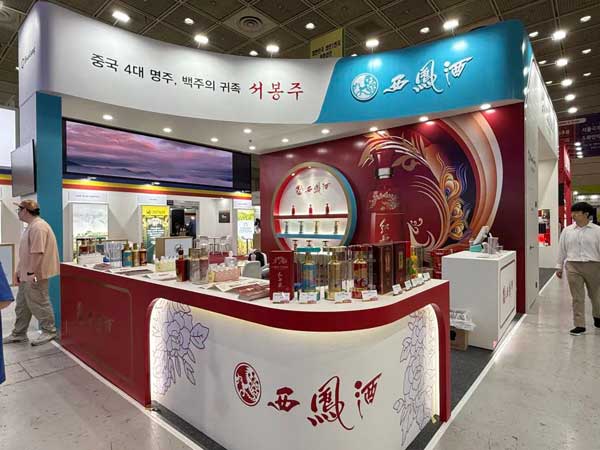 西鳳酒亮相2025韓國葡萄酒與烈酒博覽會
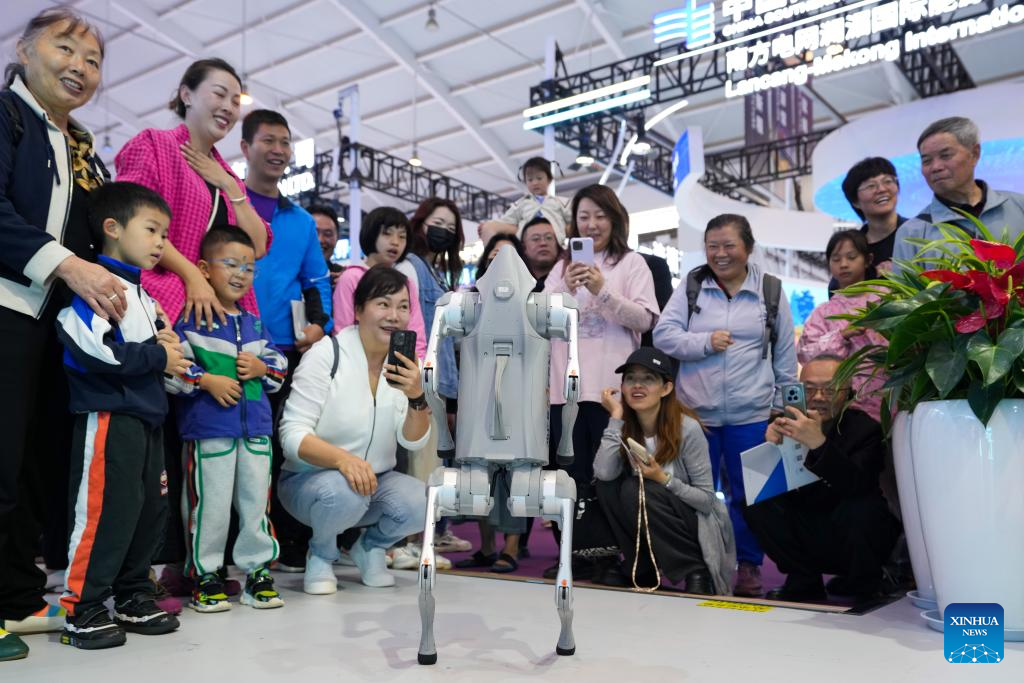 High-tech exhibits displayed at 9th Chin